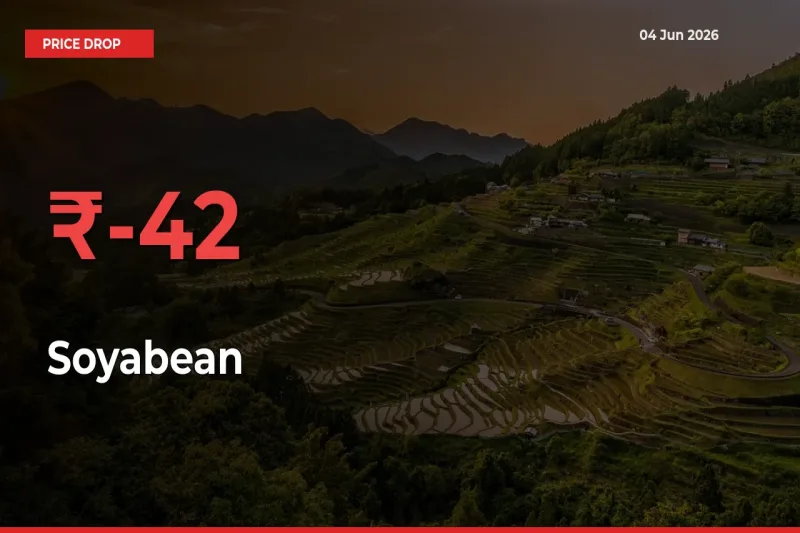
In a sharp market reversal on 04 Jun 2026, Soyabean prices at Local Market plunged by 42.41% in a single trading session. The sudden drop has triggered fresh discussion among farmers, traders, and market observers tracking daily mandi price movements and short-term agricultural trends.
The average mandi price settled at ₹3,901, while the session recorded a high of ₹4,052 and a low of ₹3,500. Such a steep percentage correction in one day typically indicates aggressive selling pressure or an unexpected supply surge.
Why Did Soyabean Prices Suddenly Fall?
A 42.41% single-day decline is considered significant in mandi trading. Several key factors may have contributed:
- Sudden increase in arrivals flooding the mandi with higher supply
- Weaker procurement demand from traders, exporters, or processors
- Short-term panic selling triggered by negative price expectations
- Profit booking after recent price gains
When supply expands rapidly without matching demand absorption, prices tend to correct quickly — especially in spot agricultural markets.
Today’s Price Breakdown – Quick Data Snapshot
- Daily Percentage Drop: 42.41%
- Average Price: ₹3,901 per quintal
- Highest Price: ₹4,052 per quintal
- Lowest Price: ₹3,500 per quintal
- Active Mandis Reporting: 2
Comparison with the 30-Day Price Range
Over the past 30 days, Soyabean touched a high of ₹13,000 and a low of ₹60, with the monthly average around ₹6,900.
If today’s average price approaches the lower boundary of this 30-day range, it may indicate strengthening downside momentum. A break below the monthly support level could signal structural weakness rather than temporary volatility.
Price Movement Across Major Mandis
| Mandi | Price (₹ per quintal) |
|---|---|
| Badnagar APMC | ₹4,052 |
| Thathakapatti(Uzhavar Sandhai ) | ₹3,750 |
If similar price declines are visible across multiple mandis, the trend can be considered widespread rather than localized. Broad-based decline typically reflects systemic supply pressure.
20-Day Trend Analysis – Temporary Shock or Ongoing Weakness?
| Date | High (₹) | Low (₹) | Average (₹) |
|---|---|---|---|
| 04 Jun | ₹4,052 | ₹3,500 | ₹3,901 |
| 03 Jun | ₹11,000 | ₹1,000 | ₹6,773 |
| 02 Jun | ₹11,000 | ₹1,101 | ₹6,829 |
| 01 Jun | ₹11,000 | ₹60 | ₹6,951 |
| 31 May | ₹10,000 | ₹4,000 | ₹6,710 |
| 30 May | ₹10,300 | ₹1,200 | ₹6,978 |
| 29 May | ₹10,000 | ₹1,500 | ₹7,006 |
| 28 May | ₹11,000 | ₹2,700 | ₹6,918 |
| 27 May | ₹11,000 | ₹1,300 | ₹6,912 |
| 26 May | ₹9,591 | ₹700 | ₹7,038 |
| 25 May | ₹10,000 | ₹500 | ₹7,089 |
| 24 May | ₹10,000 | ₹4,000 | ₹6,931 |
| 23 May | ₹10,000 | ₹67 | ₹6,921 |
| 22 May | ₹10,000 | ₹1,000 | ₹7,015 |
| 21 May | ₹10,300 | ₹610 | ₹7,042 |
| 20 May | ₹10,101 | ₹800 | ₹7,166 |
| 19 May | ₹13,000 | ₹350 | ₹7,101 |
| 18 May | ₹10,000 | ₹1,825 | ₹6,876 |
| 17 May | ₹11,000 | ₹4,525 | ₹6,777 |
| 16 May | ₹11,000 | ₹2,051 | ₹6,776 |
| 15 May | ₹11,000 | ₹1,500 | ₹6,751 |
Reviewing the last 20 trading sessions helps identify whether the current fall is part of a gradual downward trend or an abrupt correction. Consecutive lower averages suggest sustained weakness, whereas a single sharp drop after stable trading may indicate short-term volatility.
What Should Farmers Consider Now?
Sudden mandi price drops can create uncertainty. Farmers should evaluate storage capacity, liquidity needs, and regional price comparisons before making selling decisions. Monitoring whether prices stabilize in the coming sessions is crucial.
Trader & Market Strategy Outlook
For traders, sharp declines sometimes open short-term procurement opportunities — especially if demand fundamentals remain intact. However, volatility management and inventory planning become critical when markets show rapid downside movement.
Market Outlook – What to Watch Next
The immediate focus will remain on arrival flow, buyer participation, and price behavior near the 30-day support level. If supply pressure persists, further weakness cannot be ruled out. Conversely, stabilization in arrivals may help prices recover.
Continuous monitoring of daily mandi prices, historical trends, and cross-mandi comparison is essential for informed agricultural decision-making and strategic market positioning.